Why Solar Panel Recycling Machines Are Becoming “Affordable”
As solar installations age, more panels are reaching end-of-life, creating a growing need for recycling. What used to be a niche, high-cost operation is becoming more accessible because equipment makers now offer modular lines, smaller-capacity systems, and standardized components. An “affordable” solar panel recycling machine is typically not a single device, but a configurable set of machines that can be scaled to match local panel volume, labor costs, and regulations. The right configuration can reduce landfill fees, recover valuable materials, and create a steady service business for installers, utilities, and waste operators.
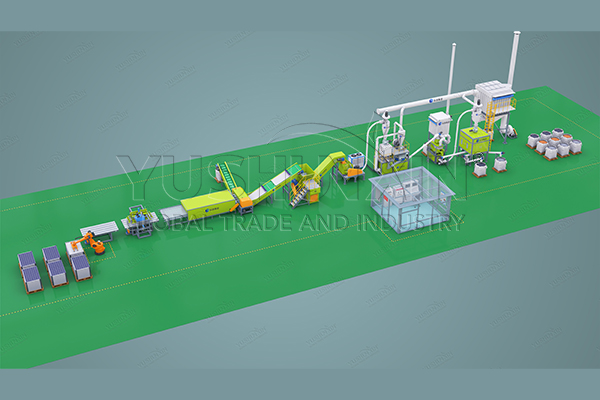
Typical Cost Ranges (What You’re Paying For)
Costs vary widely depending on capacity, automation level, and whether the system targets basic material separation or higher-purity recovery. Entry-level, semi-manual setups designed for low throughput are usually the least expensive, while automated, high-throughput lines cost significantly more due to robust shredders, dust control, advanced separation stages, and safety systems. Your budget is also influenced by permitting requirements, fire protection, and environmental controls—especially when dealing with glass dust, polymers, and trace metals. In most cases, the “machine cost” is only part of the project; installation, training, and facility upgrades can materially change the final figure.
Core Configuration: The Main Modules You’ll Need
A practical affordable line often starts with manual dismantling (removing frames and junction boxes), followed by size reduction using a shredder or crusher. After that, a screening unit classifies particle sizes, and separation equipment (magnetic separator for ferrous parts, eddy current for aluminum, and airflow or gravity tables for mixed fractions) improves output quality. A dust collection system is not optional in real-world operations; it protects workers and prevents downtime. Many lines also include a bagging or baling station to reduce transport costs and improve resale value of recovered aluminum and glass.
Optional Upgrades That Improve Recovery Value
If your goal is higher-value material recovery, consider add-ons like thermal delamination (to loosen encapsulants), advanced optical sorting, or specialized milling to increase glass purity. These upgrades raise capital cost but can improve resale prices and reduce disposal volume. Another “hidden” upgrade is data tracking and weighing systems, which help you invoice customers accurately and prove recycling compliance.
Matching Capacity to Your Business Model
Affordability depends on choosing the smallest system that still meets your throughput and quality targets. If your feedstock is irregular, a flexible semi-automated line may outperform a complex system that sits idle. If you have guaranteed volume via contracts, higher automation can lower cost per ton. The best approach is to price the full workflow—equipment, labor, power, wear parts, and disposal—then choose a configuration that pays back through recycling fees plus recovered material sales. Visiting: https://www.solutionsforewaste.com/product/solar-panel-recycling-plant-cost/
Leave a Reply