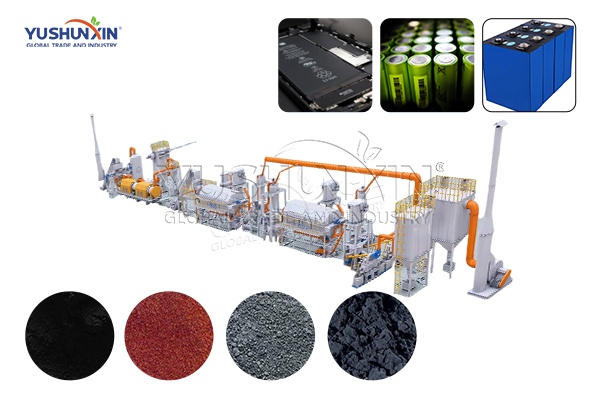
Large projects fail at the scale-up step more often than at the laboratory step, because a process that works in a pilot cell may behave differently inside a full production hall. The lithium battery recycling process scalability depends on equipment modularity, buffer capacity between stages and a control philosophy that keeps every unit inside its design envelope. You, as a project investor or as a process engineering manager, evaluate those three factors before you approve the layout. Scalability also decides the cost of the second and third production module, and that cost defines the long-term return of the whole facility.
Which design choices make a lithium battery recycling process scalable?
Modular equipment ranks first, because a plant built from identical modules duplicates capacity without redesign. Buffer storage between process steps ranks second, and that storage absorbs the short stops that appear in every industrial operation. A control system with central data logging ranks third, because that system lets your engineers compare the performance of each module. A lithium battery recycling plant line design that applies these three principles supports a phased investment plan.
Which processing equipment scales without loss of separation quality?
Screening units and density separators scale by increasing surface area, and that increase preserves the separation efficiency of each unit. Crushers scale by adding a parallel machine rather than by enlarging one rotor, and that approach protects the particle size distribution of the output. Dust collection systems scale by adding filter modules, and that addition keeps the air to cloth ratio inside the design range. A modular battery recycling line therefore reaches a higher capacity without a loss of black mass quality.
How does plant layout support future capacity growth?
A layout that reserves clear space beside each module allows your company to install the next unit with minimal civil works. Service corridors wide enough for a forklift and a crane keep maintenance work efficient as the plant grows. Utility headers sized for the final capacity avoid a second electrical installation campaign later. A large scale battery recycling project design also separates the material flow from the personnel flow, and that separation supports both safety and productivity.
How do you plan the workforce and maintenance for a large plant?
Workforce planning matches the number of operators with the automation level of each module, and that match controls the largest recurring cost of the plant. Preventive maintenance follows the running hours of each machine, and that schedule prevents the unplanned stops that erode output. Your training programme covers the discharge station, the shredder, the dryer, the separators and the control room. A spare part strategy that keeps critical items on site protects the availability of the line during the harvest of battery packs.
Conclusion for project investors and process engineering managers
Scalability rewards the project that designs the first module as part of a larger plant instead of as a standalone unit. An industrial battery recycling technology provider that supplies modular equipment, layout engineering and commissioning support gives your team a growth path with predictable cost. The hydrometallurgy route recovers nickel, cobalt, manganese and lithium as separate products, and that separation raises the value of each tonne processed. If your project team needs a scalable reference design, you can learn more about https://www.sxlbp.com/technology/hydrometallurgical-lithium-battery-recycling-plant/ before the next engineering review.