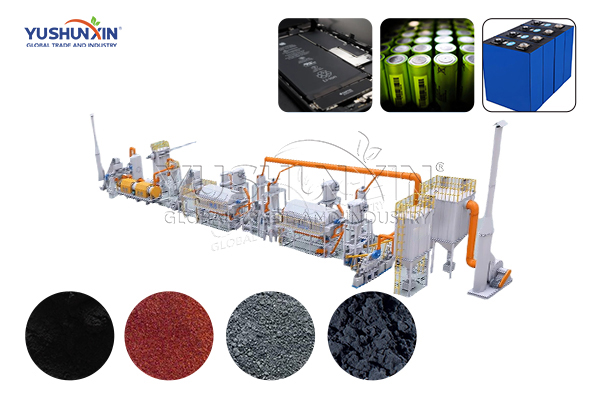
Industrial companies pay twice for end-of-life batteries, first for storage and transport and later for external disposal, and you, as an industrial plant manager or as a recycling company operator, can reduce both charges with an internal recovery step. A complete black mass recovery process converts worn battery packs into copper, aluminium, steel and concentrated black mass that smelters and refiners purchase. The complete black mass recovery process also protects your compliance record, because your company documents every kilogram that leaves the site.
Which stages define a complete black mass recovery process?
The sequence starts with collection and safety inspection, and that step identifies swollen or leaking cells before they enter the building. Discharge, dismantling, shredding, drying, magnetic separation, density separation and dust collection follow in a fixed order, and each stage prepares the material for the next one. The drying stage removes electrolyte residue, and the separation stage concentrates lithium, nickel, cobalt and manganese inside the black mass fraction. Your quality laboratory samples the output every shift, and that sampling record supports the price negotiation with the downstream refiner.
Which treatment equipment keeps disposal costs low for industrial companies?
A double shaft shredder, a hammer mill, a vibrating screen, a magnetic separator, an eddy current unit and a bag filter house form the core of the treatment line, and those items define the labor requirement of the shift. Processing equipment with enclosed conveying reduces dust, and that enclosure lowers the ventilation load inside your building. The dust collection system protects both the workforce and the sale value of the black mass, because clean fractions attract higher offers. Treatment machinery that runs with low noise also fits an urban industrial zone where your company operates near other tenants.
How does battery discharge and dismantling improve black mass quality?
A controlled discharge step lowers the residual voltage of every module, and that reduction prevents thermal events inside the shredder. Manual dismantling of large packs separates the casing, the wiring harness and the modules, and that separation increases the metal recovery rate of the whole line. Your operators then feed only cells and modules into the treatment stage, and the treatment stage produces a finer and cleaner black mass, and the lithium battery pyrolysis disposal route complements that preparation when the feed contains electrolyte-rich cells. That preparation discipline protects the equipment and improves the consistency that your buyer tests at the refinery gate.
How do you measure disposal cost savings from a black mass recovery project?
Your accounting team compares the external disposal invoice before and after the project, and that comparison shows the direct saving per tonne. A lithium battery recycling line for disposal cost reduction also creates revenue from copper, aluminium and black mass, and that revenue improves the net position of the plant. A black mass recovery plant for industrial companies with a documented mass balance helps your sustainability report, because the report requires verified recovery figures. The payback period becomes visible when your team adds the avoided disposal fee, the material revenue and the reduced storage cost.
Conclusion for industrial companies and recycling operators
Internal recovery turns a compliance cost into a controlled operation that your plant manages every day. A lithium battery recycling plant supplier that provides layout drawings, spare part lists and operator training shortens the learning curve of your team. The battery recycling industry continues to expand, and that expansion keeps demand firm for clean black mass fractions. If your management team needs a starting point for capacity and layout, you can learn more about https://www.sxlbp.com/products/500kg-h-lithium-battery-recycling-plant-for-sale/ before the next budget meeting.