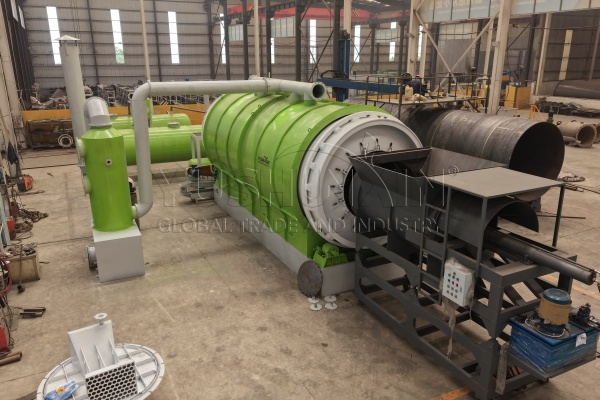
Waste tires are difficult to dispose of because they are bulky, slow to degrade, and unsuitable for simple landfill treatment. Tire pyrolysis offers a practical recycling route by converting end-of-life tires into recoverable products such as pyrolysis oil, carbon black, steel wire, and combustible gas. As a manufacturer of pyrolysis recycling equipment, YUSHUNXIN provides tire pyrolysis solutions designed to help recycling companies turn waste tires into usable resources through a controlled thermal process.
Why Waste Tires Need a Better Recycling Method
Every year, large numbers of used tires come from passenger cars, trucks, buses, and industrial vehicles. If these tires are stored in open areas, they occupy valuable land and may create fire risks, odor problems, and mosquito breeding conditions. Traditional disposal methods cannot fully recover the material value inside tires.
Tire pyrolysis helps change this situation. Instead of treating waste tires only as solid waste, the process breaks down rubber under oxygen-limited heating conditions and separates useful by-products for further use. Understanding the per-ton profit potential helps operators assess the economic viability of this recycling approach.
What Can Tire Pyrolysis Recover?
A tire pyrolysis plant can recover several valuable outputs. According to YUSHUNXIN’s pyrolysis furnace material, waste tires can produce fuel oil, steel wire, and carbon black, with an average oil yield shown as about 40%–45% depending on the tire material and operating conditions.
Pyrolysis oil can be used as an industrial fuel in suitable heavy oil generators, boilers, and heating systems, or it can be further refined depending on local market requirements. Carbon black can be pressed into briquettes, used as fuel, or processed for lower-grade rubber and plastic applications. Steel wire can be sold to metal recycling channels.
How Syngas Improves Energy Use
Another important output is combustible gas. In a well-designed pyrolysis system, syngas is not simply wasted. It can be recycled back to heat the reactor, helping reduce external fuel consumption during stable operation. YUSHUNXIN’s product material also describes syngas as a by-product that can be recycled to the furnace for reactor heating.
This internal energy reuse makes tire pyrolysis more practical for long-term recycling projects. For businesses evaluating the investment side of similar technologies, reviewing pyrolysis equipment investment levels helps clarify the relationship between capital investment and energy recovery features.
Why Equipment Design Matters
A reliable tire pyrolysis project is not just one reactor. It needs feeding, heating, condensation, oil storage, gas recycling, steel wire handling, carbon black discharge, dust control, and exhaust treatment. Poor system design may lead to unstable oil recovery, higher maintenance pressure, and lower by-product value.
Proper planning of factory area requirements ensures that all components are efficiently integrated for long-term operation.
YUSHUNXIN Tire Pyrolysis Solution
YUSHUNXIN helps customers design pyrolysis recycling equipment according to raw material type, processing capacity, plant layout, fuel plan, and environmental requirements. For investors facing large volumes of waste tires, tire pyrolysis can provide a practical way to reduce tire stockpiles, recover useful materials, and build a more resource-oriented recycling business. A successful example is a Malaysian plastic-to-oil project, which demonstrates how comprehensive by-product planning supports both compliance and profitability. Visiting: https://www.greenindustrialsolutionsx.com/product/waste-plastic-pyrolysis-plant/
Leave a Reply