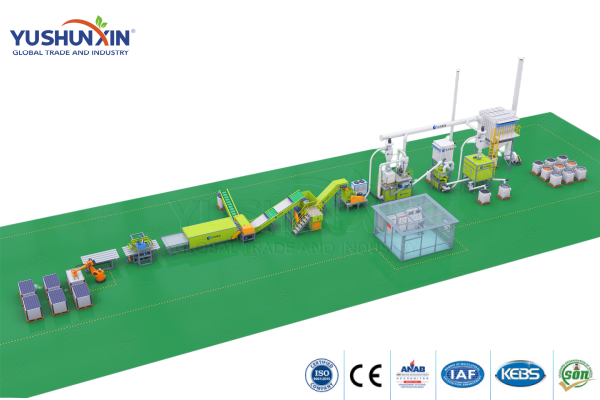
A turnkey solar panel recycling plant solution delivers the design, the equipment, the erection and the commissioning under one contract, and the procurement model decides how the buyer carries the risk between those packages. You, as a project investor or as a recycling company manager, examine the turnkey solar panel recycling plant solution scope before the tender. The model that matches the engineering capacity of the owner team performs better than the model with the lowest headline price.
Which procurement models are available?
A full turnkey contract places the design, the supply and the commissioning with one contractor, while a package contract splits the line into three or four purchase orders. A procurement model for a turnkey solar panel recycling project also exists as a hybrid, where the equipment supplier carries the process guarantee and the owner manages the civil works. You compare the three routes against the capacity of your own project office. The chosen route then fixes the tender document.
How does the contract allocate the risk?
A fixed-price contract with liquidated damages transfers the construction risk, while the owner keeps the feedstock and the permit risk. A contract structure for a pv recycling project also fixes the acceptance test and the performance guarantee, because those two items define what the contractor must deliver. You align the payment milestones with the verified progress, and that alignment keeps the cash and the work in step. The dispute then has a written basis.
Which technical documents does the tender require?
The mass balance, the equipment list, the utility consumption and the layout form the document set that the bidders must submit. A solar panel recycling project cost basis also requires a common definition of the module mix and of the product, because two bidders that assume different specifications produce incomparable prices. You publish that definition with the tender. The evaluation then rests on one base.
How does the buyer evaluate the offers?
A table with the capacity, the compliance scope, the performance guarantee and the price turns several offers into one decision. You score the technical items before opening the financial envelope, and that order prevents a low price from hiding a missing scope. The bidder with the complete scope usually wins even when its price is higher. The owner then negotiates with a clear position.
Conclusion for project investors and recycling companies
The procurement model decides how much engineering the buyer performs and how the risk is shared, and the right model matches the capability of the owner team. A turnkey solar panel recycling advisors team that supplies the tender package, the evaluation matrix and the contract structure helps the investor secure a complete plant. The volume of end-of-life modules keeps rising, and a contract with a clear boundary protects the investment. If your team needs a reference for the process configuration and the procurement scope, you can learn more about https://solutionsforewaste.com/solar-panel-recycling-plant/ before the next tender. The same evaluation matrix also supports the contract negotiation, and that document keeps the scope aligned with the price that the owner approves.