A lithium battery pyrolysis treatment line recovers metals, black mass and oil from packs that no longer serve a vehicle, and the recovery rate of the plant depends on decisions that the EPC contractor makes during design rather than during operation. You, as an EPC contractor or as a recycling company manager, examine the lithium battery pyrolysis treatment route against the mechanical route before the basic engineering freezes. The comparison shows which material streams the plant can sell and which stream returns to the process as an internal loss.
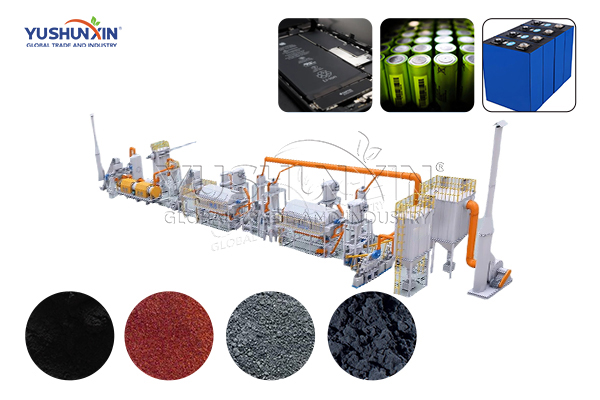
Which process stages decide the recovery rate of a lithium battery recycling plant?
The discharge, the dismantling, the shredding, the thermal stage and the separation circuit each contribute to the final balance of the plant. A design for the highest recovery rate in lithium battery recycling exercise follows the material through every stage, because a loss that appears in one unit cannot be corrected downstream. You measure the metal content of the black mass and the purity of the aluminium and copper fractions, and those numbers show where the circuit releases value. The engineering team then assigns one target to each stage instead of a single target to the whole plant.
How does the discharge and dismantling stage affect downstream recovery?
The packs arrive with different states of charge and different mechanical conditions, and a controlled discharge protects the shredder from a thermal event. A lithium-ion battery that reaches the crusher with residual energy damages the blades and contaminates the surrounding material. You design a buffer area with fire detection and a dedicated handling procedure, because that area defines the feeding rhythm of the whole line. The dismantling station also removes the cables and the plastic housings before the shredder, and that step raises the purity of every downstream fraction.
Which equipment choices raise the recovery of valuable battery materials?
The shredder, the magnetic separator, the eddy current unit and the sieving deck work as one circuit, and the cut point of each unit decides what the next stage receives. A hydrometallurgical stage in lithium battery treatment extends the recovery beyond the mechanical route, because it dissolves the metals that physical separation cannot liberate. You compare a two-stage crushing arrangement with a single-stage arrangement, since the finer product releases more black mass from the current collector foils. The dust collection system then captures the fine fraction that would otherwise leave the plant as an airborne loss.
How does an EPC contractor verify the recovery rate during commissioning?
The performance test fixes the feedstock, the throughput and the sampling method before the plant starts, and that protocol allows both parties to compare the result with the guarantee. A plant design that raises battery material recovery therefore includes a laboratory plan and a mass balance sheet that the commissioning team fills at every shift. You keep samples of the input and of every output, because the laboratory analysis of those samples settles any later dispute. The handover documents then carry the measured recovery rate instead of a theoretical value.
Which project risks threaten the recovery target after handover?
The feedstock composition changes when the battery market shifts, and a plant that cannot accept a new chemistry loses part of its design recovery. You specify a range of acceptable input rather than a single battery type, and that specification gives the operator room to adapt the disposal process. The wear of the shredder blades and of the screen mesh also lowers the recovery slowly, and a scheduled inspection catches the change before the monthly report does. Training the shift team on the sampling routine keeps the measured result close to the real one.
Conclusion for EPC contractors and recycling companies
The recovery rate of a battery recycling plant comes from the design of each stage, the discipline of the performance test and the range of feedstock that the contract accepts. A battery recycling plant design advisors team that supplies the mass balance model, the test protocol and the training plan helps the contractor hand over a plant that meets the guarantee. The volume of end-of-life batteries keeps rising, and a line that recovers a higher share of the valuable material serves that volume with a better margin. If your team needs a reference for the process route and the equipment scope, you can learn more about https://www.sxlbp.com/products/500kg-h-lithium-battery-recycling-plant-for-sale/ before the next engineering review.