Waste solar panels contain glass, aluminum frames, silicon cells, copper ribbons, backsheet material, EVA film and a small but valuable amount of silver. For recycling companies, the key is not only to break the panels, but also to build a complete solar panel recycling line that can separate valuable materials step by step and prepare silver-rich material for further extraction.
Why Is Silver Recovery Important in Solar Panel Recycling?
Silver is mainly used in the conductive paste on solar cells. Although the silver content in each panel is not large, it becomes a major profit point when the project processes tons of waste PV modules every day. In many crystalline silicon solar panels, one ton of retired modules may contain about 500–1000 g of silver, depending on panel type, production year and cell design. Therefore, silver recovery can improve the total value of a PV module recycling plant.
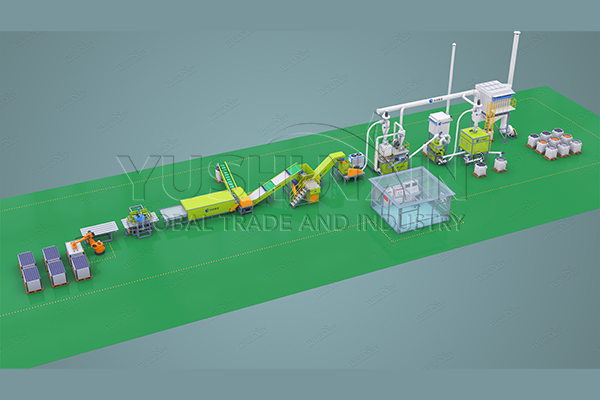
Step 1: Remove Aluminum Frames and Junction Boxes
A complete recycling line usually starts with pretreatment. Workers or automatic equipment remove the aluminum frame and junction box first. This step reduces impurities and separates materials with clear recycling value. Aluminum frames can be sold directly as scrap aluminum, while cables and junction boxes may contain copper and plastic.
Step 2: Delaminate Solar Panels by Pyrolysis or Thermal Treatment
After pretreatment, the solar panel enters the thermal delamination system. The main purpose is to destroy the EVA bonding layer between glass, silicon cells and backsheet. Under controlled heating, EVA loses its adhesion, so glass, silicon wafers and metal ribbons can be separated more easily.
For industrial projects, this step is very important. If the EVA is not fully removed, later crushing and separation will become unstable. A well-designed solar panel pyrolysis recycling line can improve material separation efficiency and reduce manual cleaning work.
Step 3: Separate Glass, Silicon and Metal Ribbons
After delamination, the line uses screening, air separation, gravity separation or manual sorting to recover glass, silicon pieces and metal ribbons. Glass is the largest material by weight, while silicon and ribbons contain higher-value materials. The silver is mainly connected with the solar cell surface, so the silver-bearing material should be collected and enriched before chemical extraction.
Step 4: Extract Silver from Silver-Bearing Material
The silver extraction section usually uses chemical leaching and replacement. In a typical process, silver-bearing powder or cell material enters an acid washing reactor. Nitric acid can dissolve silver into solution. Then, filtration separates silicon powder, carbon residue and other solids from the silver-containing solution.
After that, sodium chloride can help form silver chloride, and iron powder can be used for replacement to obtain crude silver. The crude silver then enters the refining process to get higher-purity silver.
Step 5: Treat Wastewater and Exhaust Gas Properly
Silver extraction is not only a recovery process. It also requires environmental control. Wastewater should be neutralized with caustic soda and treated by activated carbon adsorption before discharge or reuse. The thermal delamination section also needs dust collection, gas purification and safe exhaust treatment.
Why Choose a Complete Solar Panel Recycling Line?
A complete line connects pretreatment, thermal delamination, material separation, silver extraction, refining and environmental treatment. This makes the whole process more stable and easier to operate. For project investors, Yushunxin can configure the recycling line according to panel type, daily capacity, workshop layout, environmental requirements and final product plan. This helps customers recover glass, aluminum, silicon, copper and silver with a clearer process route and better long-term project value. Visiting: https://www.spdsx.com/product/solar-panel-recycling-line/
Leave a Reply