Why Plant Layout Matters In LFP Battery Recycling
A well-designed LFP battery recycling plant is not only about buying a crusher or separator. It is about arranging each process section in the right order, so batteries can move safely from discharge to material separation. For project investors, the layout directly affects safety control, labor efficiency, dust collection, black mass quality, and future capacity expansion.
LFP batteries contain lithium iron phosphate cathode material, aluminum foil, copper foil, separator film, steel shell or aluminum shell, plastics, and electrolyte residues. Therefore, the plant layout should separate safety treatment, size reduction, powder collection, metal separation, and environmental protection into clear functional zones.
Battery Discharge And Safety Pretreatment Area
The first section should be the battery receiving and discharge area. Before crushing, waste LFP batteries need safe discharge to reduce the risk of short circuit, fire, and thermal runaway. This area is usually placed near the raw material warehouse but separated from the main crushing workshop.
After discharge, workers can sort batteries by type, size, shell material, and pack structure. If the incoming materials include battery packs, the layout should also reserve space for pack dismantling, module separation, cable removal, and BMS removal. This step helps reduce impurities before mechanical recycling.
Crushing And Size Reduction Section
After pretreatment, the batteries enter the crushing section. The layout should keep feeding, primary crushing, secondary crushing, and material conveying in one continuous direction. This reduces repeated handling and improves production stability.
For LFP battery recycling, crushing should not only break the battery shell. It should also open the electrode structure and prepare materials for later separation. A closed conveying system is important because fine powder may escape during crushing. Dust collection points should be arranged near the crusher outlet, transfer points, and screening equipment.
Black Mass Collection And Screening Area
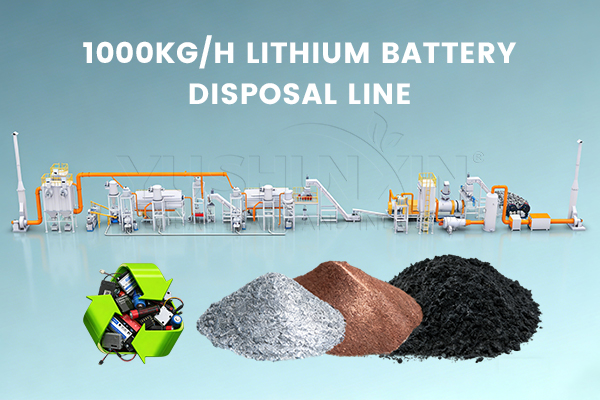
The next section is screening and powder collection. Through vibrating screening, fine black powder can be separated from larger metal and plastic fractions. In many lithium battery recycling lines, the process uses physical crushing, airflow separation, and vibrating screening to separate valuable materials, finally obtaining black powder, copper, aluminum, and iron strips.
Black mass quality is one of the key factors for project value. Therefore, the layout should avoid mixing black powder with plastic film, shell fragments, or large metal particles.
Air Separation And Metal Separation Section
After screening, the remaining mixed materials enter air separation, magnetic separation, and other sorting equipment. Air separation helps remove light separator film and plastic pieces. Magnetic separation can remove iron materials. Further separation can recover copper and aluminum fractions.
This section should be arranged after powder collection, because too much black powder in mixed materials will reduce separation accuracy and increase dust load.
Environmental Protection And Control System
A complete LFP battery recycling plant layout also needs a waste gas treatment system, dust collection system, fire protection design, and electrical control room. Exhaust gas from processing should be purified through environmental protection equipment before discharge.
For industrial buyers, the better layout is modular. It allows the plant to start with a practical capacity, such as 500 kg/h or 1000 kg/h, and leave space for future expansion. A clear layout from discharge to material separation helps improve safety, reduce labor, and support stable long-term operation. Visiting: https://www.sxlbp.com/products/lfp-battery-recycling-plant/
Leave a Reply