Lithium battery recycling is becoming an important solution for recovering valuable metals from used EV batteries, energy storage batteries, and electronic waste batteries. Among all recovered materials, black mass is the most valuable output because it contains lithium, nickel, cobalt, manganese, graphite, and other battery active materials. A well-designed lithium battery recycling line can separate black mass efficiently while reducing safety risks, dust pollution, and material loss.
What Is Black Mass in Lithium Battery Recycling?
Black mass is the fine powder recovered from battery electrode materials after crushing and separation. It usually comes from cathode and anode materials. Depending on the battery type, such as NCM, LFP, LCO, or mixed lithium batteries, the composition of black mass can be different. For recyclers, higher black mass purity means better downstream refining value and stronger project profitability.
Complete Lithium Battery Recycling Process
The recycling process usually starts with battery sorting and discharge. Waste batteries must be safely discharged before crushing to reduce the risk of fire, short circuit, or thermal runaway. After that, the batteries enter the dismantling or pre-crushing stage.
In the crushing section, battery shells, foils, separators, plastics, and electrode materials are broken into smaller particles. To improve safety, the crushing system can be designed with negative pressure, dust collection, explosion-proof protection, and inert gas protection according to the raw material condition.
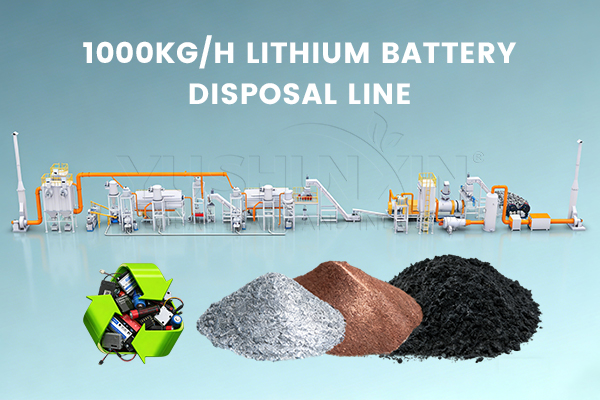
After crushing, the material enters drying, screening, magnetic separation, air separation, and fine separation sections. Aluminum, copper, iron, plastic, diaphragm material, and black mass are gradually separated. The final goal is to collect black mass with high purity and reduce metal impurities as much as possible.
Main Equipment Used for Black Mass Separation
A complete lithium battery recycling line may include a feeding system, battery crusher, hammer crusher, drying system, air separator, magnetic separator, vibrating screen, pulse dust collector, cyclone separator, negative pressure system, and PLC control system. For higher safety requirements, the line can also include oxygen monitoring, nitrogen protection, fire control, and explosion-proof electrical components.
Why Equipment Design Matters
Black mass separation is not only about crushing batteries. The key is controlling particle size, temperature, oxygen content, dust, and material flow. Poor equipment design may cause black mass loss, low purity, dust leakage, or safety problems. Therefore, recyclers should choose a system based on battery type, processing capacity, automation level, environmental requirements, and final material recovery goals.
YUSHUNXIN Lithium Battery Recycling Solution
YUSHUNXIN provides lithium battery recycling equipment for black mass separation projects. The production line can be customized according to raw materials, capacity, plant layout, safety standard, and customer budget. Whether you process EV battery modules, small lithium batteries, or mixed battery scrap, a suitable recycling solution can help improve recovery efficiency and build a more profitable battery recycling business. Visiting: https://www.sxlbp.com/technology/black-mass-separation-process-in-lithium-battery-disposal/
Leave a Reply