An aluminum can de-coating furnace is used to remove paint, lacquer, ink, plastic film, oil and other organic coatings from used beverage cans before melting. For UBC recycling plants, this step is important because coated aluminum scrap can create smoke, odor, slag and aluminum burning loss if it enters the melting furnace directly. As a manufacturer of aluminum can recycling equipment, YUSHUNXIN provides de-coating, melting and ingot casting solutions to help customers improve aluminum cleanliness, melting stability and final product value.
What Is the Purpose of De-coating?
Used beverage cans are not pure aluminum on the surface. They normally contain printed ink, lacquer, coating, plastic film and other organic residues. If these materials are not removed before melting, they burn inside the furnace and increase the pressure on exhaust treatment.
The purpose of de-coating is to clean the aluminum surface before melting. After thermal treatment, the aluminum scrap becomes cleaner and more suitable for stable melting, refining and ingot casting.
How Does the Furnace Work?
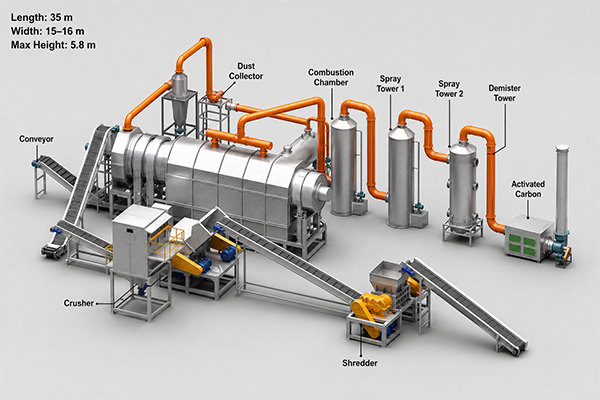
Before entering the de-coating furnace, waste aluminum cans are usually shredded into uniform pieces. In YUSHUNXIN’s process, the cans can be shredded into about 2–5 cm pieces, which helps heat transfer more evenly during the thermal de-coating stage. Using a heavy-duty crushing system at the front end ensures consistent feedstock size and protects downstream equipment from oversized material.
The shredded material is then conveyed into the de-coating furnace. The furnace works under controlled low-oxygen conditions. At a stable temperature range of about 420–500°C, organic coatings on the aluminum surface are thermally decomposed, volatilized or carbonized. Since this temperature is lower than the melting point of aluminum, the aluminum base material remains solid and protected during the process.
How Are Combustible Gases Treated?
During de-coating, organic coatings crack into combustible gas and carbon residue. The combustible gas can be sent into the combustion chamber for secondary combustion. This helps provide part of the system heat and reduces external fuel consumption.
In a well-designed system, the exhaust gas can pass through cyclone dust removal and activated carbon adsorption before discharge. This makes the process cleaner and more suitable for industrial recycling plants with environmental requirements. Installing a magnetic impurity extractor before the furnace also helps remove ferrous contaminants that could otherwise compromise the thermal treatment uniformity.
What Happens After De-coating?
After de-coating, the aluminum scrap surface becomes cleaner. This can reduce black smoke, odor, floating slag and aluminum burning loss during melting. The de-coated aluminum then enters the melting furnace, where it is heated to about 700–750°C for melting. The molten aluminum can then go through refining, slag removal, temperature control, ingot casting and automatic palletizing. Adding a non-ferrous metal recovery stage after shredding further enhances feedstock purity before thermal treatment, which directly improves de-coating efficiency and final ingot quality.
Why Choose YUSHUNXIN?
YUSHUNXIN designs aluminum can de-coating furnaces and UBC recycling lines according to raw material condition, capacity target, fuel type, environmental requirements and automation level. For customers who want to process used beverage cans into reusable aluminum ingots, a de-coating furnace is not just an optional machine. It is a key pretreatment system that improves melting efficiency, reduces pollution risk and supports higher-value aluminum recycling. Visiting: https://www.greenindustrialsolutionsx.com/product/aluminum-can-de-coating-line/
Leave a Reply