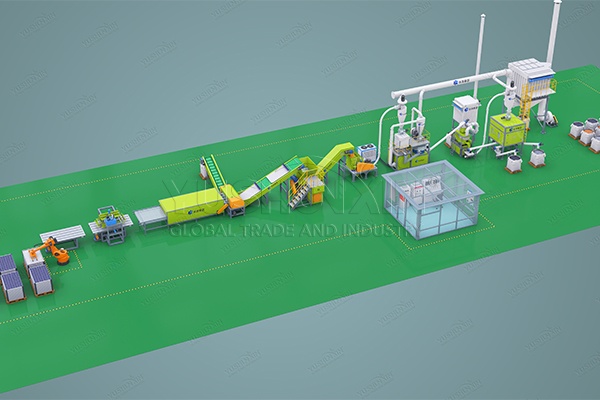
When buyers ask about solar panel recycling machine price, the final cost cannot be decided by one standard number. A complete solar panel recycling system is usually customized according to raw material type, processing capacity, recovery target, automation level, environmental requirements, and local installation conditions. For investors, the key is not only buying a machine, but choosing a recycling solution that can process waste PV panels efficiently and recover valuable materials such as aluminum, glass, silicon, copper, and silver-bearing materials.
Processing Capacity Affects the Machine Price
Capacity is one of the biggest factors influencing the price of a solar panel recycling machine. A small recycling line for trial production or local collection centers usually needs fewer machines and a simpler layout. A large industrial solar panel recycling plant requires stronger crushing, separation, conveying, dust collection, and control systems. Higher capacity also means larger motors, more durable machine structures, higher power consumption, and more complex site planning. Therefore, before requesting a quotation, buyers should confirm their expected daily or hourly processing volume.
Recycling Process Design Makes a Difference
Different recycling processes lead to different costs. Some projects only require frame removal, glass separation, crushing, and basic sorting. Other projects need deeper material recovery, such as thermal treatment for EVA removal, fine crushing, air separation, screening, electrostatic separation, or silver extraction preparation. If your goal is to recover higher-purity materials, the production line will need more equipment and more precise control. This increases the initial investment, but it may also improve the long-term recycling value.
Single-Glass and Double-Glass Panels Need Different Solutions
The type of waste solar panels also affects the equipment configuration. Single-glass PV modules and double-glass PV modules have different structures, thicknesses, and separation difficulty. Double-glass panels are usually harder to dismantle and may require stronger crushing and separation equipment. If your raw materials include mixed panel types, the manufacturer needs to design a more flexible solar panel recycling system, which can also influence the final price.
Automation Level and Labor Cost
A basic solar panel recycling machine may require more manual operation, while a fully automatic solar panel recycling production line can reduce labor input and improve continuous operation. Automatic feeding, conveying, sorting, dust removal, and PLC control systems all affect the quotation. For countries with high labor costs, a higher automation level may be more cost-effective in the long run.
Environmental Protection Configuration
Dust, noise, waste gas, and wastewater treatment requirements vary by country and region. A recycling plant designed for stricter environmental standards may need advanced dust collectors, sealed conveying systems, exhaust gas treatment units, or wastewater neutralization equipment. These systems increase the project cost, but they are important for legal operation and stable approval.
Installation, Layout, and After-Sales Service
The final cost also includes machine layout design, shipping, installation guidance, commissioning, operator training, spare parts, and technical support. A professional manufacturer such as YUSHUNXIN can design the solar panel recycling machine according to your raw materials, capacity, land area, recovery target, and local environmental requirements. To get an accurate price, buyers should provide panel type, expected capacity, available workshop size, electricity conditions, and required finished products. Visiting: https://www.solutionsforewaste.com/product/solar-panel-recycling-plant-cost/
Leave a Reply