As the global solar industry matures, increasing numbers of photovoltaic (PV) panels are approaching the end of their operational lifespan. Efficient recycling technologies are essential to recover valuable materials such as glass, aluminum, silicon, and metals while minimizing environmental impact. Among the available solutions, mechanical recycling and pyrolysis recycling represent two major technological approaches. Understanding their differences helps recycling businesses select the most suitable system. This decision often begins with a clear evaluation of available processing methods to match project goals.
Understanding Mechanical Recycling Technology
Mechanical recycling is currently one of the most widely used methods for processing end-of-life solar panels. This approach focuses on physical dismantling and separation. The process typically begins with removing the aluminum frame and junction box, followed by crushing and grinding the panel structure. Through screening, air separation, and other sorting technologies, materials such as glass, metals, and silicon fragments can be separated and recovered. For a real-world application of this approach, you can explore the mechanical processing project in Germany which demonstrates high-volume physical separation.

Mechanical recycling systems are known for their relatively straightforward process design and stable industrial operation. They can process large volumes of solar panels efficiently while maintaining reasonable recovery rates for major materials. For facilities handling significant throughput, planning adequate space for mechanical operations becomes a practical consideration.
How Pyrolysis Recycling Works
Pyrolysis recycling takes a different approach by applying thermal treatment to break down the polymer layers within solar panels. Under high temperatures in an oxygen-free environment, encapsulation materials such as EVA are decomposed, allowing the underlying glass and silicon cells to be separated more easily. This method can be particularly effective for recovering high-purity materials, such as silver from solar cells, which adds economic value to the recycling process. Insights from projects like the solar panel recycling initiative in India show how pyrolysis can be integrated to meet specific recovery targets and regulatory requirements.
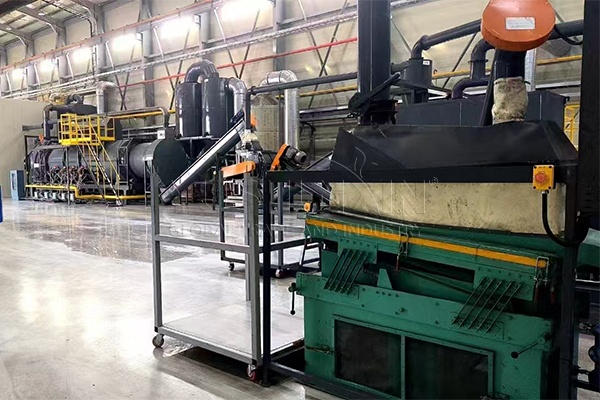
This technology can potentially improve access to certain internal materials within photovoltaic modules. However, pyrolysis systems require precise temperature control, specialized reactors, and additional emission management equipment. As a result, operational complexity and investment costs can be higher compared with mechanical recycling solutions.
Comparing Efficiency, Cost, and Operational Practicality
When evaluating these technologies, recycling companies must consider several factors: equipment investment, processing capacity, operational stability, and environmental management requirements. Mechanical recycling systems often provide faster throughput and simpler operation for large-scale panel waste processing. Pyrolysis systems may offer deeper material separation but require more complex thermal management.
The optimal choice depends on project scale, local regulatory standards, and the target materials to be recovered.
Reliable Equipment Makes the Difference
Regardless of the selected technology, equipment quality plays a decisive role in recycling efficiency and operational reliability. At YUSHUNXIN, we focus on designing durable solar panel recycling equipment with integrated crushing, separation, and dust control systems. Our solutions help recycling facilities process photovoltaic waste efficiently while maintaining safe and environmentally compliant operations.
As the volume of retired solar panels continues to grow worldwide, selecting the right recycling technology and reliable equipment will be key to building a sustainable solar recycling industry.
Leave a Reply