As plastic waste continues to accumulate worldwide, industries are increasingly turning to pyrolysis recycling technology as a practical solution for both environmental management and resource recovery. One of the most common questions investors and recycling companies ask is how much fuel oil can actually be produced from one ton of waste plastic. The answer depends on several factors, including plastic type, system efficiency, and process control. At YUSHUNXIN, we manufacture advanced pyrolysis recycling equipment designed to maximize oil recovery while maintaining stable and energy-efficient operations.
The Oil Yield Depends on Plastic Type
Not all plastics produce the same amount of fuel oil during pyrolysis. Plastics such as polyethylene (PE), polypropylene (PP), and polystyrene (PS) typically generate higher oil yields because of their hydrocarbon-rich composition. Under optimal conditions, these materials can produce approximately 70% to 90% fuel oil by weight.
Many recycling facilities now rely on plastic-to-fuel conversion technology to recover energy from large volumes of waste plastics.
For example, one ton of clean PE or PP plastic waste may produce roughly 700 to 900 kilograms of pyrolysis oil. In contrast, plastics containing more additives, fillers, or moisture may produce slightly lower yields. Materials such as PVC are usually removed before processing due to their chlorine content, which can affect product quality and equipment performance.
Understanding the Pyrolysis Conversion Process
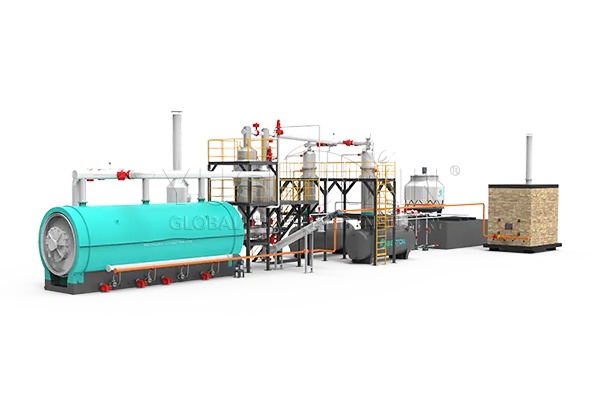
Plastic pyrolysis takes place in a sealed reactor where waste plastic is heated in an oxygen-free environment. As temperatures gradually rise—typically between 350°C and 450°C—the long polymer chains in plastic break down into smaller hydrocarbon molecules.
Industrial facilities often install waste plastic pyrolysis equipment to ensure stable processing and consistent oil recovery rates.
During this thermal decomposition process, oil vapor forms and flows into a condensation system. The vapor cools and converts into liquid fuel oil, which is collected in storage tanks. Non-condensable gases generated during the reaction are often reused to heat the reactor, improving overall thermal efficiency and reducing operating costs.
Equipment Efficiency Influences Final Output
Oil yield is not determined solely by the raw material. Equipment design and process stability also play a major role. Factors such as reactor heating uniformity, sealing reliability, condensation efficiency, and temperature control can significantly affect recovery rates.
Before investing, many operators analyze real project profitability scenarios to understand how equipment performance affects overall returns.
YUSHUNXIN pyrolysis recycling equipment is engineered with reinforced reactor structures, precise temperature monitoring systems, and optimized condensation units to ensure efficient vapor recovery. These features help maintain stable production conditions and maximize fuel oil output.
Turning Plastic Waste Into Energy Value
Recovering fuel oil from waste plastics provides both environmental and economic benefits. By converting plastic waste into usable energy products, recycling businesses reduce landfill pressure while creating valuable fuel resources for industrial applications.
Investors interested in large-scale recycling projects often study international plastic pyrolysis facility examples to better understand plant design and operational strategies.
Leave a Reply