A solar panel recycling plant creates a profitable solution when the system design turns each module fraction into a saleable product with predictable quality. The solar panel recycling plant system design connects module intake, frame removal, junction-box separation, thermal delamination, crushing, screening and material collection. photovoltaics continues to expand worldwide, and that growth builds a long-term supply of end-of-life modules for facilities with a secure collection network. The business case also depends on local buyers for glass, aluminium, copper and silver-bearing residue. Owners therefore design the line around the material market and the available feedstock rather than around a single machine specification.
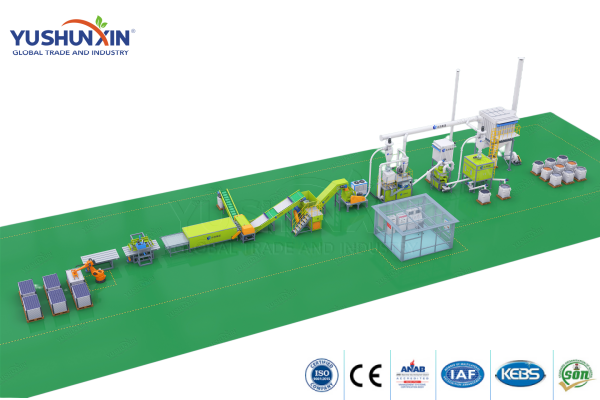
Which input conditions define a profitable solar panel recycling system design?
Module type, frame construction, glass composition and the condition of junction boxes determine the handling route and the recoverable fractions. A plant receives a mix of framed and frameless panels, so the design needs flexible dismantling stations and enclosed conveyors. The project team samples incoming batches and records mass by module type before processing. A profitable solar panel recycling solution reserves storage for damaged panels, controls dust at the crusher and keeps clean glass separate from mixed residue. Collection contracts and transport distance also influence the minimum economic volume. A plant that understands its incoming material can select the right capacity for the thermal recycling equipment and avoid a line that only performs well with an ideal feedstock.
Which process stages create the highest commercial value in PV recycling?
Frame removal recovers aluminium that buyers accept with little additional work, while junction-box separation concentrates copper and high-value fines. Thermal delamination releases the glass and backsheet fractions before screening and separation. An end of life solar panel recycling plant design keeps the output streams clean and matches each product with a qualified buyer. The related solar panel recycling equipment cost factors review helps the owner compare capital intensity with the expected material revenue. Energy use per tonne, module throughput and the recovery rate of silver-bearing fines set the profitability of the solution. A plant that produces mixed residue loses value even when its machines operate at rated speed. Product quality and separation consistency drive the commercial result.
How do uptime and energy consumption affect solar panel recycling plant profitability?
The thermal stage consumes a large share of process energy, and a line with unstable feeding wastes heat during every restart. Stable conveyor speed, adequate insulation and consistent module preparation protect the operating cost. The maintenance plan covers heating elements, screens, crusher hammers, bearings and the dust collection system. Operators record downtime by cause and compare throughput with the design capacity. A plant that reaches high availability can spread labour and fixed cost across more tonnes and serve collection contracts on time. The system design should provide access for service without a long shutdown. Reliable operation turns a technically capable solar panel processing line into a durable commercial asset.
Which financial and market assumptions make the recycling solution investable?
The model tests module supply, recovery yield, product price, power cost and plant availability under base and downside cases. Local buyers for glass and metal reduce transport cost, while a distant silver refiner adds logistics and assay requirements. The owner includes permits, building works, storage, fire protection and working capital in the investment plan. Sensitivity analysis shows the throughput needed to cover fixed cost and the effect of lower silver content or higher energy prices. A profitable solution usually matches a moderate line to a secure regional feedstock, then adds capacity after the first plant proves its recovery and sales performance. This staged approach reduces the risk carried by the investor.
Conclusion for recycling companies investing in PV recovery
A profitable solar panel recycling plant combines flexible intake, high material recovery, reliable thermal processing and local product buyers. The system design must reflect the real module mix and the expected operating hours rather than a generic capacity claim. A solar panel recycling project engineers that reviews the mass balance and equipment layout helps the investor test the business case before construction. Maintenance, energy use and contamination control also belong in the financial model. The complete solar panel recycling line reference appears at https://www.spdsx.com/product/solar-panel-recycling-line/ for the next feasibility study.