Civil works consume a visible share of the capital budget of a solar panel thermal recycling process project, and that share changes the payback period more than most investors expect. You, as a project investor or as an environmental engineering contractor, examine how the solar panel thermal recycling roi analysis reacts when the foundation, the building and the utility connection move from estimate to signed contract. That comparison separates equipment cost from site cost, and the separation shows which part of the budget a supplier quotation actually covers.
Which civil works items belong to a solar panel recycling project?
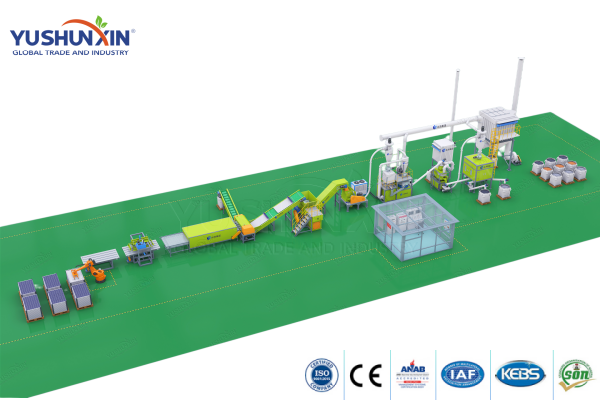
The reinforced floor that carries the thermal treatment unit, the dismantling bay, the glass and aluminium storage area and the water treatment pit form the core of the civil package. A solar panel thermal recycling line also requires a transformer, compressed air and a dust collection duct, and those services arrive through trenches that the building contractor casts. PV module handling areas need a sealed surface, because broken glass leaves sharp fragments that damage the floor slab and the wheel of a loader. Your engineering team prices each item against the local construction index rather than the vendor estimate, and that habit prevents a systematic underestimate of the site cost.
How does the site cost change the return of a thermal recycling project?
Foundation and building cost rises faster than equipment cost in most markets, so a project that delays the civil design loses part of the return before the first tonne of photovoltaic waste arrives. A civil works effect on thermal recycling project return review compares two candidate locations, and the comparison usually shows that the distance to the waste source dominates the land price. You also check the discharge capacity of the local grid, because a weak connection forces a larger transformer and a longer cable route. The thermal recycling process then consumes that electrical capacity during every operating hour.
Which design choices reduce the civil cost of a recycling plant?
A compact layout places the shredder, the thermal treatment chamber and the separation stage inside one bay, and that arrangement reduces the floor area that the contractor must prepare. A thermal processing line for photovoltaic modules that arrives as a modular package shortens the installation window, because the modules connect through pre-fabricated frames. You keep the storage of solar panel feedstock under a canopy instead of a closed building, and that choice removes a large structural cost while it protects the material from rain. The same decision keeps the dust collector closer to the process, and the ducting length then falls with the building volume.
How does the project office control the civil budget?
A bill of quantities with unit prices gives the owner a measurable baseline, and each monthly certificate follows the measured progress on site. A return planning for a solar panel recycling plant model links that certificate to the cash flow, because a civil overrun appears as an interest cost long before an equipment failure appears. You keep one contingency for the soil conditions and a second one for the permit conditions, and the two reserves stay separate in the ledger. The contractor also submits as-built drawings during the works, because a late drawing delays the approval of the recycling plant installation.
How does the utility connection affect the operating cost?
A photovoltaic panel recycling plant draws most of its electricity through the thermal stage, and the connection capacity defines the price that the operator pays for each kilowatt hour. You compare a medium-voltage supply with a low-voltage supply before the construction contract starts, because the tariff structure changes the annual operating budget. A producer that already operates a photovoltaic system on adjacent land often negotiates a better supply agreement with the network operator. The same negotiation fixes the maximum demand that the thermal recycling unit may call from the grid at peak load.
Conclusion for project investors and engineering contractors
Civil works decide whether the return of a solar panel thermal recycling project matches the business case that the investor approved, and the foundation, the building and the connection carry most of that risk. A solar panel recycling investment advisors team that supplies a measured bill of quantities, a phased construction plan and a cash flow model helps the owner keep the payback period inside the approved range. The volume of end-of-life modules keeps rising, and a plant that reaches production on schedule serves that volume while the value of the recovered raw material remains favourable. If your team needs a reference for the process configuration and the site scope, you can learn more about https://www.spdsx.com/product/solar-panel-recycling-equipment-cost/ before the next investment committee.