A pyrolysis recycling project does not only depend on waste treatment capacity. Its long-term value also depends on how well the recovered by-products can be used, sold, or reused inside the plant. For customers planning a waste tire or plastic pyrolysis plant, pyrolysis oil, carbon black, and combustible gas are three key outputs that directly influence project feasibility. As a manufacturer of pyrolysis recycling equipment, YUSHUNXIN helps customers evaluate both machine configuration and by-product application before investment.
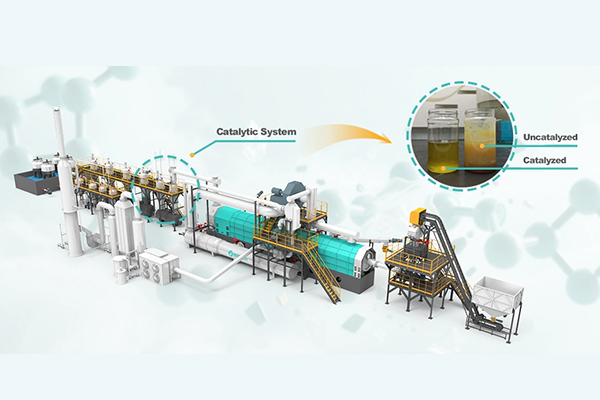
Pyrolysis Oil: The Main Commercial Output
Pyrolysis oil is usually the most important product from tire and plastic pyrolysis projects. It can be used as industrial fuel in suitable boilers, furnaces, generators, and heating systems, depending on local fuel standards and end-user requirements. In many projects, buyers focus on oil yield first, but oil quality is equally important.
The market value of pyrolysis oil depends on raw material type, moisture content, reactor temperature control, condensation efficiency, and post-treatment demand. For example, PE, PP, and PS-rich plastics often support better oil recovery than heavily contaminated mixed plastics. Waste tires can also produce usable oil, but the final application may require filtering, settling, or further refining. Therefore, customers should not only ask “How much oil can I get?” They should also ask “Who can use this oil locally, and what quality do they require?” Understanding the profit expectations per ton helps operators assess the economic viability of different feedstock and output quality combinations.
Carbon Black: A By-Product with Practical Reuse Potential
Carbon black is a major by-product in waste tire pyrolysis. Its market application depends on ash content, particle size, purity, and post-processing level. In basic projects, recovered carbon black may be used for briquetting, fuel blending, construction-related materials, or low-grade rubber and plastic applications.
If customers want higher-value carbon black products, they may need grinding, magnetic separation, pelletizing, or further upgrading equipment. This means the carbon black market is not one fixed market. It ranges from simple fuel use to more refined material reuse. YUSHUNXIN usually recommends customers evaluate local buyers first, then decide whether additional carbon black processing equipment is necessary. The pyrolysis process itself determines the basic characteristics of all by-products, including carbon black.
Combustible Gas: Reduce Operating Cost Instead of Selling It
Pyrolysis gas is often more valuable when reused inside the plant. During stable operation, combustible gas can be returned to the heating system to support reactor operation and reduce external fuel consumption. This improves energy efficiency and lowers daily operating costs.
Unlike pyrolysis oil or carbon black, gas is usually not the main sales product because storage and transportation can be difficult. Its best value often comes from internal circulation, stable combustion control, and safer gas handling design. For businesses evaluating the investment side of similar technologies, reviewing plastic pyrolysis equipment cost ranges helps clarify the relationship between capital investment and energy recovery features.
Why By-Product Planning Matters
A successful pyrolysis plant is not just a machine that converts waste into oil. It is a complete recycling business model. Customers need to consider feedstock supply, by-product quality, local buyers, environmental requirements, storage conditions, and operating cost.
YUSHUNXIN designs pyrolysis recycling equipment according to the customer’s raw material, capacity target, site layout, and by-product plan. By understanding the market for pyrolysis oil, carbon black, and gas before purchasing equipment, investors can build a more practical, stable, and profitable recycling project. A successful example is a North American waste plastic pyrolysis facility, which demonstrates how comprehensive by-product planning supports both compliance and profitability. Proper planning of site footprint needs ensures that all by-product handling systems are efficiently integrated for long-term operation.
Leave a Reply