Starting an e-waste recycling business has become highly attractive as global electronic waste grows rapidly and governments enforce stricter rules on landfill disposal. Waste electronics contain valuable materials including copper, gold, silver, aluminum, plastics, and rare metals, all of which need professional processing. A successful e-waste recycling model turns this waste stream into stable, sellable outputs while meeting strict environmental and safety standards. With strong demand from manufacturers and recyclers, this industry offers reliable growth and strong profit potential.
Define Your Inputs and Business Model
Before purchasing equipment, clarify the types of e-waste you will process: waste household appliances, circuit boards, mobile phones, computers, cables, or LED displays. Evaluate your supply sources: corporate IT disposal, appliance retailers, collection stations, or government recycling programs. Your business can use three models: fee-based processing per unit or per ton; resale of recovered metals and plastics; or a blended model. The best choice depends on local disposal fees, transportation costs, and nearby material buyers.
Choose the Right E-Waste Recycling Line
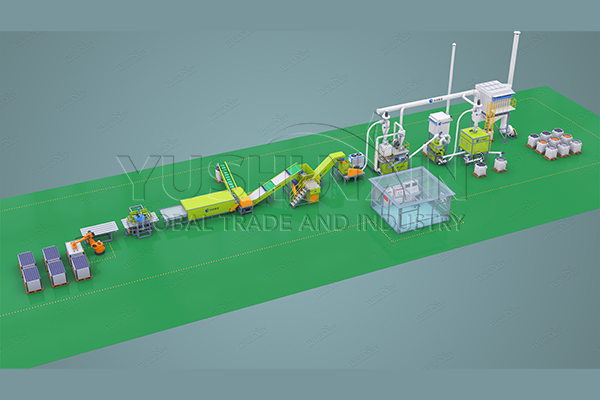
A complete e-waste recycling line starts with safe manual dismantling to remove batteries, screens, and hazardous components. Next, a shredder or crusher breaks down the remaining parts into manageable particles—the core of mechanical recycling. Then multi-stage separation equipment is used: magnetic separators for ferrous metals, eddy current separators for non-ferrous metals, air classifiers, and density separators for plastics and fibers. For higher-value recovery from circuit boards, add a specialized PCB recycling system to extract gold, silver, and copper. These modules improve purity but require additional investment and compliance.
Plan for Dust, Safety, and Compliance
E-waste recycling is not just “shred and sell”. Fine dust, heavy metals, and harmful components require sealed conveying, dust extraction, and filtration systems. Worker protection, noise control, fire prevention, and secure data destruction must be built into the layout. You will need permits for waste handling, emissions, and storage. If processing batteries or screens, extra hazardous material controls and detailed records are mandatory.
Build Sales Channels for Recovered Materials
Profit depends on stable material sales. Copper, aluminum, and precious metals have clear markets. Clean plastics can be sold to granulators and molders. Identify buyers early—metal refineries, smelters, plastic recyclers, and regenerant manufacturers—and adjust your line outputs to meet buyer purity requirements. Long-term contracts ensure consistent cash flow.
Start Small, Prove Quality, Then Scale
Most new operators begin with a compact line including dismantling, shredding, and basic separation. Once supply and sales are stable, upgrade to automated separation or PCB recovery systems. When choosing machines, prioritize reliability, spare parts availability, and adaptability to different waste types. With the right production line and clear market channels, e-waste recycling becomes a scalable, compliant, and profitable business that grows with the global circular economy.
Leave a Reply