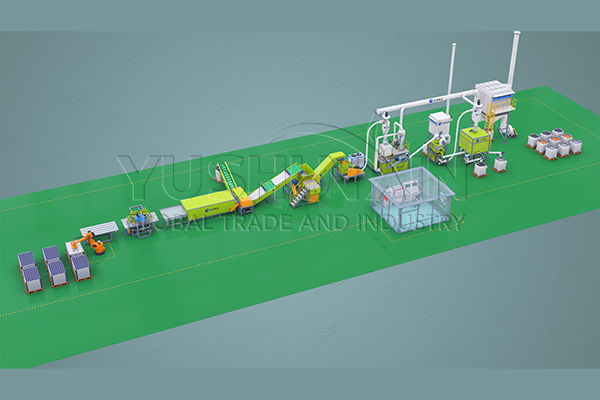
As the first wave of solar panels reaches end-of-life and global landfill restrictions on PV waste tighten, a purpose-built solar panel recycling line is no longer a luxury—it’s a core asset for businesses looking to capitalize on the fast-growing PV waste stream. These integrated lines turn complex solar panel waste into sellable commodities like aluminum, glass, copper, and silver, while ensuring full compliance with environmental and safety regulations. Whether you’re a waste management firm, solar installer, or entrepreneur entering the renewable space, a tailored recycling line delivers consistent material recovery, predictable revenue, and scalability to grow with the booming solar industry.
Core Components of a Functional Solar Panel Recycling Line
A practical PV recycling line is designed for efficiency, low contamination, and flexibility to handle the most common crystalline silicon panels (and optional thin-film capabilities), with modular components that scale with your business. Every line starts with mechanical disassembly: a frame-removal station quickly detaches high-value aluminum frames, while junction box removal eliminates plastic and copper contamination to boost downstream material purity. This step is low-cost but critical, as clean aluminum frames have a direct, high-margin resale path to smelters and scrap dealers.
The heart of the line is the primary shredder/crusher, which breaks down the remaining panel laminate into uniform, manageable pieces for separation. This machine is engineered to avoid over-crushing silicon cells, preserving their value for further recovery. Following shredding, a suite of separation equipment takes over: magnetic separators remove ferrous contaminants, eddy current separators extract non-ferrous metals like copper, and screens plus air classification sort glass cullet from plastic and EVA encapsulant fractions. For businesses targeting higher-value recovery—such as clean glass for solar manufacturers or silicon-rich material—add-on delamination or thermal treatment systems process EVA encapsulant, unlocking premium commodity streams (at the cost of additional permitting and upfront investment).
Non-Negotiable Design Considerations for Recycling Lines
A successful solar panel recycling line isn’t just about machinery—it’s built with safety, compliance, and profitability in mind from the start. Fine glass dust and polymer particles require industrial-grade extraction and filtration systems to protect workers and meet air emission standards, while noise control and fire prevention are integrated into the line layout. Regional regulations dictate mandatory permits for waste handling, storage, and emissions, with thin-film panel processing requiring extra controls for hazardous constituents and detailed documentation.
Modularity is another key design feature: the best recycling lines let you start small with disassembly, shredding, and basic separation, then add advanced treatment systems as your PV waste supply and sales channels stabilize. When selecting equipment, prioritize reliability, easy access to spare parts, and adjustable settings to handle different panel constructions—this flexibility ensures your line adapts to evolving PV waste types and market demands.
Build for Profit: Align Your Line with Market Demand
The ultimate goal of a solar panel recycling line is to turn waste into profit, and that means aligning your machine outputs with local commodity buyer specifications. Aluminum frames and copper have the most consistent resale pathways, so your line should prioritize clean, high-purity extraction of these materials. For glass and plastic fractions, calibrate separation equipment to meet the quality standards of local glass recyclers and polymer processors—this turns low-value mixed waste into sellable goods. By starting small, proving material quality to buyers, and scaling incrementally, your solar panel recycling line becomes a scalable, compliant business that thrives alongside the global shift to renewable energy.
Leave a Reply